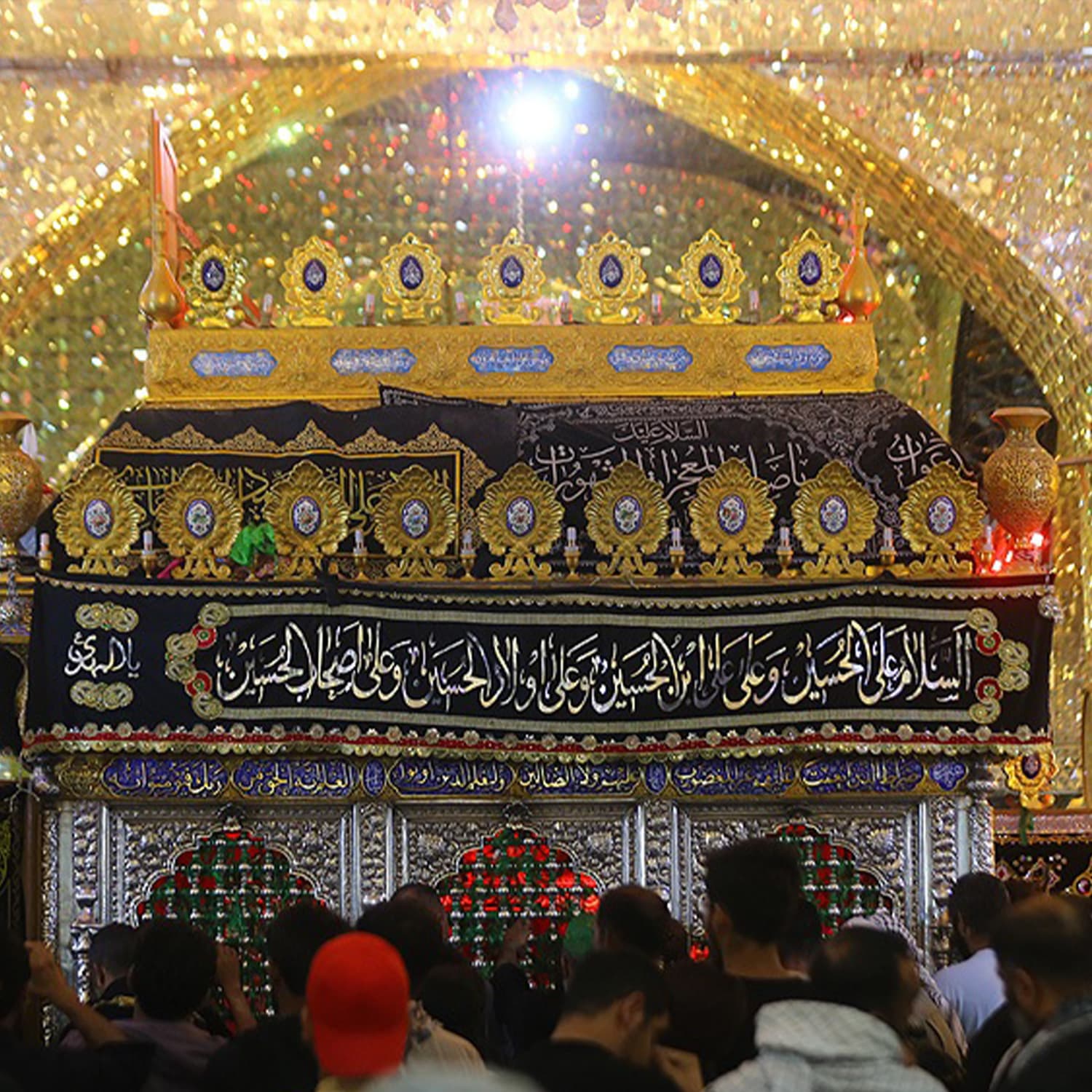
Shrine of Sayyid Muhammad ibn Imam Ali al-Hadi (PBUH)
Address
Iraq, Salah al-Din Province, Balad City, Baghdad–Samarra Road, Shrine of Sayyid Muhammad (pbuh)
About
The Shrine of Sayyid Muhammad ibn Imam Ali al-Hadi in Balad | A Spiritual Jewel on the Road to Samarra
Along the spiritual highway from Baghdad to Samarra, near the quiet town of Balad, rises a turquoise dome that has guided and comforted pilgrims for centuries. This is the shrine of Sayyid Muhammad ibn Imam Ali al-Hadi (peace be upon him)—the noble son of Imam al-Hadi (a) and elder brother of Imam Hasan al-Askari (a).
Noble Lineage and Revered Status
Sayyid Muhammad was born in the year 228 AH in the village of Surayya near Medina. His mother was a pious lady named Hadith (also known as Sileel). When Imam al-Hadi (a) was summoned to Samarra by the Abbasid Caliph al-Mutawakkil, Sayyid Muhammad remained in Medina. In 252 AH, after visiting his father in Samarra, he fell ill while returning and passed away in the town of Balad. He was buried there, and that very spot became a place of spiritual refuge for generations to come.
Why Is He Called "Sab‘ al-Dujayl"?
The people of Iraq, both Sunni and Shia, refer to Sayyid Muhammad with the honorable title “Sab‘ al-Dujayl”—the Lion of the Dujayl River. This name reflects his revered status and the awe he inspires. It is said that even those who swear oaths avoid invoking his name lightly, fearing divine consequences—a testament to his spiritual authority and the deep respect he commands.
Virtue, Wisdom, and Character
Raised in the house of Imamate, Sayyid Muhammad was nurtured by both his father Imam al-Hadi (a) and his brother Imam al-Askari (a). His eloquence, knowledge, humility, and wisdom were so exceptional that many Shia believed he would be the next Imam after his father. His untimely death, however, clarified the divine appointment of Imam al-Askari (a). Historical reports state that Imam al-Askari tore his shirt in grief, a symbolic act expressing the profound loss of a brother and spiritual companion.
Miracles and Revered Legacy
Sayyid Muhammad is known for his miracles (karamat), many of which are documented by respected scholars such as Mirza Husayn Nuri. One well-known incident tells of a man who ignored his sister’s vow to sacrifice a sheep for Sayyid Muhammad. After slaughtering it, the man’s hand became paralyzed. When he repented and visited the shrine with tears and regret, he was miraculously healed—an event that reaffirmed the sanctity of the site and its divine connection.
History of the Shrine and Architecture
The shrine has undergone multiple restorations since its origin, which is attributed to the 4th century AH during the reign of ‘Adhud al-Dawla al-Daylami. Shah Ismail I of the Safavid dynasty renovated the shrine in the 10th century AH, and later, other major reconstructions took place, particularly in the 13th and 14th centuries.
In its current form, the shrine boasts a 150-meter square courtyard, a majestic 45-meter-high tiled dome, and a 40-meter minaret. The shrine's central tomb is covered with a beautifully crafted silver zarih (enclosure) and an ornate wooden casket, surrounded by exquisite mirror work and Persian-Islamic tile artistry. The blend of spiritual serenity and visual grandeur makes this shrine a rare gem among Islamic holy sites.
Geographical Location
The shrine of Sayyid Muhammad is located in the town of Balad, within Salah al-Din Province, approximately 85 kilometers north of Baghdad and 50 kilometers south of Samarra. It lies on the pilgrimage route between these two cities and is often visited before continuing the journey to the shrines in Samarra.
His Descendants and Genealogy
Historical accounts differ regarding Sayyid Muhammad’s offspring. Some sources claim he had no children, while others mention three sons: Husayn, Ali, and Ahmad. Several noble lineages, including the well-known Ba‘aj family (Al-Ba‘aj), trace their ancestry back to him, particularly through his son Ahmad.
Conclusion
A visit to the shrine of Sayyid Muhammad is not merely a stop on a pilgrimage route—it is an encounter with a soul of immense purity, humility, and power. Revered by scholars, loved by the people, and glorified in history, this sanctuary remains a sacred station for those seeking divine nearness through the love of Ahl al-Bayt (peace be upon them).