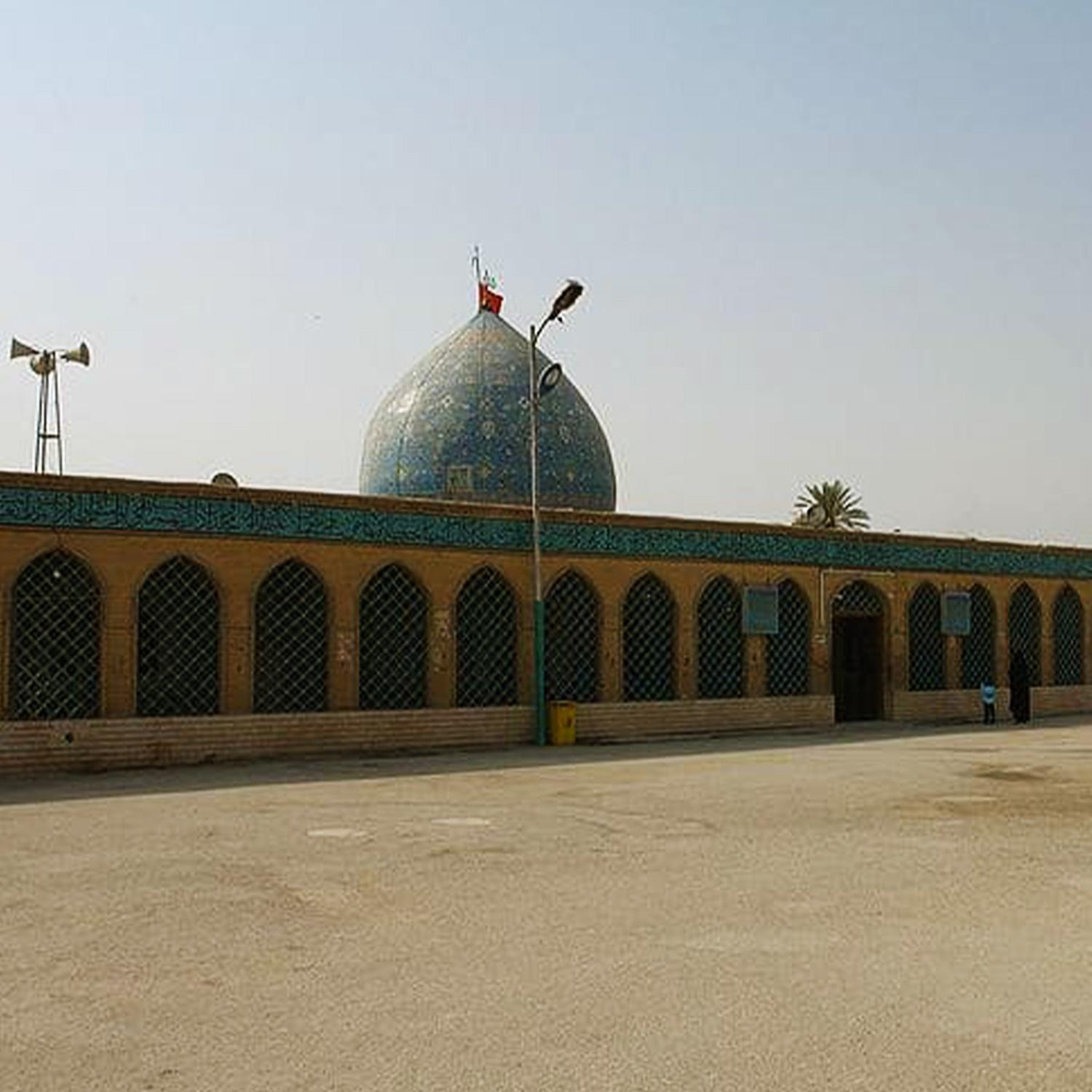
Shrine of Aun ibn Abdullah (PBUH)
Address
Karbala Governorate, 11 km northwest of Karbala city, along the Karbala–Baghdad Highway
About
🕌 Shrine of Aun ibn Abdullah
(peace be upon him) | A Hidden
Grave in the Depth of Karbala’s
History
In a land where every inch testifies to sacrifice and devotion to the Ahl al-Bayt, there stands a modest yet sacred shrine northwest of Karbala: the Shrine of Aun ibn Abdullah (peace be upon him). Situated near the Karbala–Baghdad road, this shrine has long served as a spiritual refuge for pilgrims who walk in the footsteps of the martyrs of Karbala.
Who Was Aun? Two Narratives, One Name, Diverging Histories
Historians differ over the identity of the person buried here. One view holds that he is Aun ibn Abdullah ibn Ja‘far al-Tayyar, the son of Lady Zaynab (peace be upon her), who fought valiantly alongside Imam Hussain (peace be upon him) and was martyred on the day of Ashura after his brother Muhammad.
Another perspective attributes the shrine to Aun ibn Abdullah, a descendant of Imam Hasan al-Mujtaba (peace be upon him), known as Aun Abu Najm. According to Sayyid Ja‘far al-A‘raji, this Aun was a noble of Karbala who owned farmland three farsakhs from the city and passed away there.
⚔️ Was the Karbala Martyr Buried Here?
According to a popular narrative, Aun left Karbala with Habib ibn Muzahir to seek support from the Banu Asad tribe. On their return, they were intercepted by forces loyal to Umar ibn Sa‘d, and Aun was martyred at that location, where he was buried.
However, scholars such as Shaykh al-Mufid assert that Aun’s body, like those of many other martyrs, was buried within the hexagonal section of the Imam Hussain Shrine, in a collective grave of the companions. Some traditions suggest Aun lies among them.
🗣 The War Cry That Stirred History
On the day of Ashura, after his brother’s martyrdom, Aun stepped into battle and recited the following verses:
If you do not know me, I am the son of Ja‘far,
A true martyr, shining in Paradise,
Soaring with green wings in the heavens—
This alone is honor enough on the Day of Judgment.
These lines capture the bravery and noble pride of Aun—a young man of pure lineage and unwavering faith, standing firm in the battlefield.
🏛 Architecture and Rituals of the Shrine
The current structure dates back to the Safavid era, with repairs and turquoise tilework added during the Qajar period. The turquoise dome stands out against the skyline, and the interior exudes a simple, spiritual atmosphere. Though once in a rural zone, the shrine has now nearly merged with the growing city of Karbala.
Each year on the 13th of Safar, thousands of Iraqi pilgrims—especially women—walk the path from Karbala to this shrine. Along the way, they recite religious poetry and fulfill vows, turning the pilgrimage into a living tradition of remembrance.
📿 Virtue of Visiting and Status in Prayers
In the "Ziyarat al-Nahiya (non-famous version)", Aun is remembered with reverent words:
Peace be upon Aun ibn Abdullah ibn Ja‘far al-Tayyar,
Who resides in Paradise, a servant of the Merciful,
A reciter of the Qur’an—may God curse his killer...
These phrases highlight his high spiritual station and his loyalty to God and the Ahl al-Bayt.
🔖 Conclusion | A Legacy of Faith Etched in the Margins of History
Whether this shrine belongs to a martyr of Ashura or a noble descendant of the Imams, the shrine of Aun ibn Abdullah (peace be upon him) has become a heartfelt destination for pilgrims. It stands as a symbol of youth who sacrificed their lives for truth—and a place to renew one’s pledge to faith, sincerity, and loyalty.